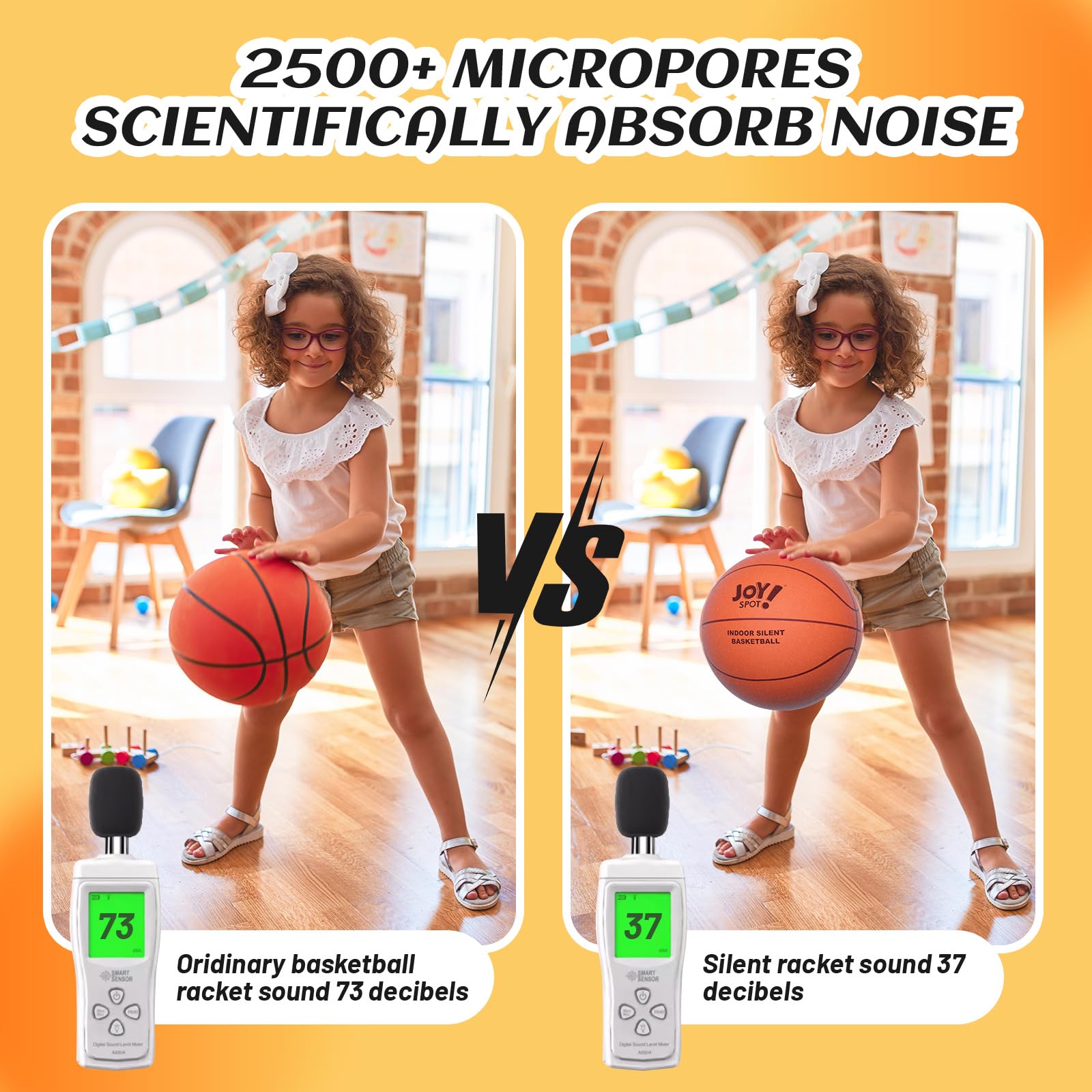

Statistics indicate that skill acquisition in basketball relies heavily on focused, repetitive practice. Traditional training environments, including gyms and outdoor courts, often feature high levels of noise, which can distract players and reduce the effectiveness of ball control drills. silent basketball offers a solution by incorporating noise-reducing materials and equipment, enabling players to practice without auditory distractions. Research shows that athletes practicing in quiet, controlled settings improve dribbling precision and hand-eye coordination up to 20% faster than those training in conventional noisy environments.
Why Is Quiet Practice Essential for Developing Ball Control?
Data highlights that concentration is crucial when refining fundamental basketball skills such as dribbling, passing, and shooting. Quiet practice environments reduce external stimuli, allowing players to focus entirely on technique, timing, and muscle memory. Studies indicate that athletes training in low-distraction settings demonstrate greater consistency, faster reaction times, and enhanced decision-making during gameplay. Silent basketball creates the ideal environment for mastering these skills through focused, repetitive practice.
What Are the Core Benefits of Using Silent Basketball for Drills?
Silent basketball tools are designed to enhance training quality without compromising technique. Research shows that practicing with specialized low-noise basketballs, sound-absorbing surfaces, and dedicated indoor spaces improves both accuracy and control. Athletes using these tools report increased confidence in handling the ball under real-game conditions. Data also indicates that quiet drills help players internalize correct movements faster, contributing to higher long-term skill retention.
How Does Silent Basketball Support Coaching and Skill Development?
Coaches are increasingly incorporating silent basketball into training programs to maximize efficiency and results. Structured, low-noise drills enable coaches to provide detailed feedback without competing with background noise. Studies reveal that athletes receiving real-time guidance in quiet environments improve execution accuracy by up to 25%. Silent basketball allows coaches to design targeted exercises for dribbling sequences, passing precision, and shooting accuracy, resulting in measurable skill development.
Why Are Controlled Environments Important for Athletic Improvement?
Research shows that consistency and control in training surfaces and conditions are essential for skill acquisition. Noise reduction, combined with uniform court surfaces, allows players to focus entirely on movement mechanics. Statistics indicate that athletes practicing in controlled environments achieve better performance outcomes, including enhanced coordination, balance, and ball-handling accuracy. Silent basketball integrates these elements, offering structured spaces conducive to high-quality practice.
How Are Technology and Analytics Enhancing Silent Basketball Training?
Data-driven insights are becoming integral to modern basketball development. Silent basketball can be combined with video analysis, ball-tracking sensors, and motion monitoring to provide real-time feedback on performance. Research suggests that athletes receiving immediate analytical feedback improve technical skills up to 20% faster than those without performance tracking. Combining silent practice with technology allows coaches and players to evaluate mechanics, adjust drills, and optimize skill acquisition efficiently.
What Trends Are Emerging in Silent Basketball Practices?
Market research indicates a rising interest in quiet, focused training methods for both professional and youth athletes. Trends include modular, sound-absorbing courts, specialized low-noise basketballs, and personalized skill-focused training sessions. Statistics show that structured silent basketball sessions increase engagement and improve technical proficiency, making them a preferred choice for individuals seeking measurable improvement in ball control and agility.
How Does Silent Basketball Contribute to Long-Term Player Development?
Consistent, distraction-free practice builds stronger neural pathways for motor skills, leading to improved dribbling, passing, and coordination. Silent basketball enables players to develop foundational techniques in a controlled environment, which translates to more precise performance in noisy, high-pressure game settings. Coaches report that athletes trained in quiet environments exhibit better focus, faster reactions, and enhanced adaptability during competitive play.
Silent basketball demonstrates that integrating low-noise, controlled practice into training programs significantly enhances ball control, technical skills, and overall performance. By combining noise reduction, structured drills, and data-driven feedback, this innovative approach offers a professional, measurable, and effective pathway for athletes seeking mastery in basketball fundamentals.